
Every year, drug testing facilities handle millions of urine samples. A growing number of these samples don’t actually come from human kidneys. Laboratory-made urine has become popular because it copies what the body makes on its own. The chemical makeup and physical traits match real samples closely enough to fool many standard tests. greenfleets.org offers information about various brands and how they compare. Creating these products requires knowledge of chemistry and how testing labs operate.
Formulation and ingredients
Manufacturers start with the same waste products kidneys produce. Urea is the main component, usually 2-3% of the total liquid. The synthetic version must match the range of creatinine levels found in real urine. Labs check for uric acid, too, and missing it would fail instantly. The formula needs more than just waste products. Sodium and potassium are dissolved in the body. A healthy urine pH should be between 4.5 and 8.0. Yellow dye makes it look like urochrome, the natural pigment. Better products add ammonia to smell right and include sulfates from metabolism. Real urine makes foam when you shake it, so some versions add compounds that bubble. Each ingredient exists to pass the checks that labs do on every sample they receive.
Maintaining proper temperature
Testing centers verify temperature fast, usually within minutes of getting the sample. Fresh urine comes out of the body at 90-100°F. Anything colder than 90 or hotter than 100 gets thrown out before testing even starts.
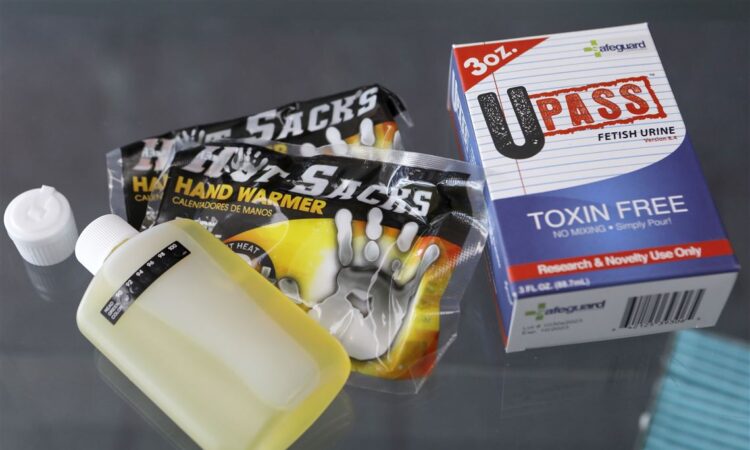
People use several ways to keep it warm. Special heating pads stick to the bottle and hold steady heat for hours. Hand warmers start working when air hits them and stay hot during transit. Microwaving works if you’re testing soon after and wrap it well to trap warmth. Keeping the container against your skin helps too, especially in spots that stay warm naturally. Bottles come with temperature strips that show the current reading. You can see right away if it’s in the safe zone. Time matters more than people think. Labs typically give you four minutes from collection to temperature check. Miss that window by a few degrees either direction, and they reject it on the spot.
How do labs analyse samples?
Labs don’t just look at samples and guess. They run them through multiple tests. Immunoassay screening comes first, using antibodies to find drug traces. This method is cheap and catches most substances quickly. Positive results are taken to the next level. GC-MS breaks down the sample into individual compounds and identifies them individually. Physical and chemical checks happen alongside drug testing:
- Specific gravity tells them how concentrated the sample is (should be 1.005-1.030)
- Creatinine shows if kidney markers exist
- pH reveals whether the acid level makes sense
- Color needs to look naturally yellow
- Foam production when shaken mimics real urine behavior
- Smell should have that ammonia scent
Lab workers watch for things that don’t add up. Samples that look watery or have weird chemical readings get examined more closely. Testing for adulterants catches foreign substances that wouldn’t exist in biological urine.
Synthetic urine performs better depending on the formula, the temperature, and the testing. Labs keep improving their ability to spot fakes through better technology that finds markers real urine has, but synthetic versions lack. States and employers have different rules about these products, with consequences ranging from just failing the test to facing criminal charges in some places.