
Our skin undergoes remarkable changes throughout our lives. As time progresses, various factors contribute to visible signs of ageing. These include environmental exposure, lifestyle choices, and natural biological processes.
Modern approaches to maintaining youthful skin have evolved significantly. Today’s options range from simple preventative measures to advanced clinical procedures. Each method addresses specific concerns that emerge at different stages of life.
Understanding how our skin changes over time is crucial for making informed decisions. Different decades present unique challenges that require tailored approaches. This comprehensive guide explores the relationship between lifestyle factors, environmental damage, and skin health.
The information presented draws upon established clinical practices and real-world experiences. It provides a balanced perspective on what contemporary approaches can realistically achieve for individuals seeking to maintain healthy, vibrant skin throughout their lives.
Key Takeaways
- Skin changes naturally over time due to both internal and external factors
- Modern approaches encompass both preventative and corrective measures
- Different life stages require tailored strategies for optimal results
- Lifestyle choices significantly impact skin health and appearance
- Evidence-based information helps in making informed decisions
- Both non-surgical and surgical options are available for various concerns
- Understanding the ageing process is essential for selecting appropriate methods
Understanding Ageing and Skin Health
The journey of our skin through the years is shaped by a complex interplay of internal and external influences. Grasping these fundamental causes is the first step towards making informed choices about maintaining skin vitality.
The Impact of Sun Exposure on Skin
Sunlight exposure stands as a primary contributor to premature skin damage. Ultraviolet rays penetrate deeply, causing significant harm to the elastin fibres that grant skin its flexibility.
When this sun damage occurs, the skin loses its ability to snap back. This leads to sagging and the formation of wrinkles over time. Protecting skin from the sun’s rays is therefore crucial for preserving its youthful elasticity.
Everyday Factors Accelerating Ageing
Beyond the sun, daily life presents other challenges. Repetitive facial expressions, like smiling or frowning, gradually etch lines onto the skin. These expression lines become more defined as the years pass.
Internally, the body’s production of collagen naturally declines, approximately 1% each year from one’s 30s. This reduction, combined with loss of fat volume and bone density, diminishes structural support. The result is thinner skin that regenerates more slowly.
Gravity then exerts a more noticeable effect on skin with reduced elasticity, leading to drooping features.
Key Factors Influencing Skin Ageing
| Factor | Primary Effect | Visible Sign |
|---|---|---|
| Sun Exposure (UV Rays) | Breaks down elastin fibres | Sagging, loss of elasticity |
| Collagen Depletion | Reduces skin firmness | Wrinkles, thinner skin |
| Loss of Fat & Bone Volume | Diminishes structural support | Hollowed cheeks, sunken eyes |
| Gravity | Pulls on less elastic skin | Drooping eyebrows, jowls |
Exploring Anti-Ageing Skincare Treatments Overview
Today’s aesthetic medicine provides an extensive selection of minimally invasive solutions for facial rejuvenation. These approaches address various concerns without requiring surgical intervention.
Comparing Non-Surgical Options
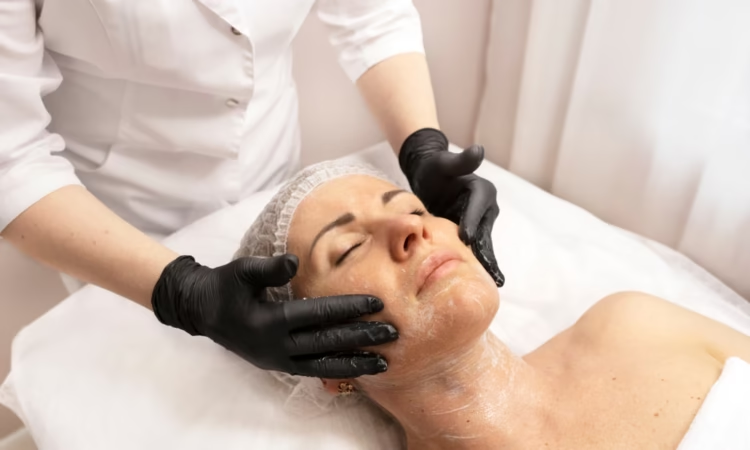
Chemical peels utilise specific acids to exfoliate the skin’s surface. This process removes damaged cells and reveals fresher-looking skin beneath.
Laser skin resurfacing treatments employ advanced technology to precisely target problem areas. They stimulate natural healing and encourage new tissue growth.
Injectable solutions offer versatile approaches for different concerns. Dermal fillers address volume loss while other injections relax dynamic lines.
Treatment Processes and Expected Results
Most non-surgical procedures involve minimal downtime. Patients can typically resume normal activities shortly after their session.
Results develop progressively over several weeks. The final outcome depends on the chosen method and individual skin condition.
Comparing different options requires considering specific goals and tolerance for recovery. Maintenance sessions often help sustain the improvements achieved.
Innovative Ingredients for Youthful Skin
The effectiveness of contemporary approaches relies heavily on scientifically-proven ingredients that target fundamental skin structures. These compounds work synergistically to address visible signs of ageing through cellular-level interactions.
The Role of Hyaluronic Acid and Collagen
Hyaluronic acid serves as a powerhouse ingredient with exceptional moisture-binding capabilities. This naturally occurring substance can hold up to 1,000 times its weight in water, providing immediate plumping effects that reduce the appearance of lines and wrinkles.
Collagen represents the structural backbone of firm, resilient skin. As natural collagen production declines with age, formulations containing collagen-boosting compounds become essential. Retinoids, derived from vitamin A, penetrate deeply to stimulate new collagen formation.
These ingredients work together to improve skin texture and restore vitality. The combination addresses both immediate hydration needs and long-term structural support.
Boosting Elastin Production Naturally
Elastin works alongside collagen to maintain skin’s flexibility and bounce. When elastin production diminishes, skin loses its ability to snap back after stretching, leading to sagging.
Innovative products incorporate ingredients that stimulate the body’s natural elastin production. Vitamin C (ascorbic acid) supports this process while providing antioxidant protection against environmental damage.
These cellular-level interventions help restore skin’s natural elasticity. The result is firmer, more resilient skin that maintains its youthful appearance over time.
Expert Recommendations and Specialist Advice
Seeking expert advice is crucial when considering interventions to maintain a youthful facial appearance. Professional guidance helps individuals navigate the complex landscape of available options.
Expert Insights from Banning Skin Ltd
The team at Banning Skin Ltd emphasises personalised approaches based on decades of life. Their experienced practitioners, including Tara Jackson and Dr Joanna Christou, recommend different strategies for various age groups.
For individuals in their 30s, the focus is on restoring glow and addressing early concerns. Those in their 40s benefit from combination treatments that plump and tighten tired skin.
As people reach their 50s, recommendations shift toward restoring volume and firmness. For those aged 60 and beyond, maintenance becomes key for smoothing lines and targeting pigmentation.
Guidance from Banning Dental
Banning Dental provides complementary insights that consider the entire facial structure. Their expertise recognises how oral health and bone density changes impact overall appearance.
This multidisciplinary approach ensures more harmonious, natural-looking results. The collaboration between aesthetic and dental specialists creates comprehensive treatment plans.
Professional guidance helps set realistic expectations about outcomes. Results vary based on individual factors including genetics and lifestyle choices over the years.
Understanding Non-Surgical Versus Surgical Treatments
Individuals seeking to address signs of ageing face a critical decision between minimally invasive procedures and more comprehensive surgical options. Each pathway offers distinct advantages suited to different needs and circumstances.
Benefits of Minimally Invasive Procedures
Non-surgical treatment options have gained remarkable popularity for their convenience and accessibility. Procedures like wrinkle-relaxing injections and dermal fillers require minimal downtime, allowing patients to resume normal activities quickly.
These treatments address common concerns including dynamic wrinkles and volume loss. Over 4 million Botox injections were performed in 2020 alone, demonstrating their widespread acceptance.
Laser therapies and injectable solutions work through different mechanisms to improve skin texture and facial contours. The results develop gradually, creating natural-looking enhancements.
When to Consider Surgical Options
Surgical interventions become appropriate when non-surgical approaches cannot adequately address significant skin laxity or structural changes. Traditional facelift procedures provide comprehensive rejuvenation of the face and neck.
These more invasive treatments reposition underlying tissues and remove excess skin. They deliver dramatic, long-lasting results for individuals with substantial sagging.
The decision between these treatment paths depends on multiple factors including severity of concerns, patient goals, and tolerance for recovery periods. Many find optimal results through combination approaches.
Patient Reviews and Success Stories
Success stories from actual clients provide compelling evidence about the outcomes of modern aesthetic approaches. These authentic accounts help prospective patients understand what to expect from various procedures.
Real Patient Experiences
Client testimonials consistently highlight both technical excellence and personal care. Inga Pearson notes,
“Tara is genuinely lovely & puts you at ease. Her work is incredible!! Enhancing features without making it look obvious.”
Holly Richards shares similar satisfaction after several years of treatments. She emphasises how practitioners address specific concerns while creating natural-looking results.
Many clients return to the same specialists over extended periods. One patient has attended for almost five years, demonstrating trust in the safety and effectiveness of these approaches.
Long-Term Treatment Outcomes
Documented results show sustained improvements in facial appearance. Patients report noticeable reduction in wrinkles and fine lines around sensitive areas like the eyes.
Age spots and pigmentation concerns also respond well to consistent treatment plans. The most common age group seeking these interventions is 40 to 55 years.
Judy Murray’s experience at 61 demonstrates benefits for mature skin. Her non-surgical approach using micro-needling delivered rejuvenating results without dramatic intervention.
These long-term relationships indicate high satisfaction levels. Patients value practitioners who take time to understand their unique concerns and goals.
Conclusion
Navigating the landscape of facial rejuvenation requires understanding both the natural ageing process and available interventions. This guide has explored how various factors contribute to visible signs like wrinkles and age spots.
From topical products to advanced laser procedures, numerous options exist to address specific concerns. These approaches can effectively reduce the appearance of fine lines across different areas of the face.
While changes in skin texture and elasticity are natural with age, modern treatments offer solutions for those wishing to maintain a youthful look. The distinction between non-surgical and surgical approaches provides flexibility for individual needs.
Ultimately, informed decisions based on professional guidance ensure the best outcomes. Understanding these principles empowers individuals to choose approaches that align with their personal goals and lifestyle.
FAQ
What are the most effective treatments for reducing fine lines and wrinkles?
Several options show excellent results. Dermal fillers containing hyaluronic acid can plump the skin to smooth facial wrinkles. Treatments like laser skin resurfacing work by encouraging new skin cells and collagen production to improve skin texture and reduce the appearance of lines.
How does sun damage contribute to visible signs of ageing?
The sun’s UV rays break down collagen and elastin in the skin over time. This damage leads to a loss of elasticity, causing wrinkles and sagging. It can also cause dark spots, known as age spots, to appear on areas like the face and hands.
Can lifestyle changes really make a difference in how skin ages?
Absolutely. Factors like sun protection, a healthy diet, and avoiding smoking significantly impact the skin’s health. These habits help protect the skin’s structure and slow the ageing process, complementing any professional treatment options one might choose.
What is the difference between muscle-relaxing injections and dermal fillers?
Muscle-relaxing injections, such as those from brands like Botox, work by temporarily relaxing the underlying muscles that cause dynamic wrinkles. Dermal fillers, however, are gels used to add volume and smooth out static lines by filling areas where collagen has been lost.
Are there any non-surgical treatments that can improve skin texture and tone?
Yes, procedures like laser therapy and chemical peels are popular non-surgical choices. They promote skin cell turnover, which can reduce the appearance of sun damage, improve skin texture, and even out skin tone over a series of sessions.
How long do the results from anti-ageing treatments typically last?
The longevity varies by treatment. Results from muscle-relaxing injections may last three to six months, while some dermal fillers can last 18 months or longer. The effects of laser resurfacing can be more long-term, but maintenance sessions are often recommended.
When should someone consider a surgical option over non-surgical treatments?
Surgical options like a facelift are generally considered for more significant concerns involving skin laxity and volume loss that non-surgical methods cannot adequately address. A consultation with a specialist is essential to determine the best approach for an individual’s needs.