

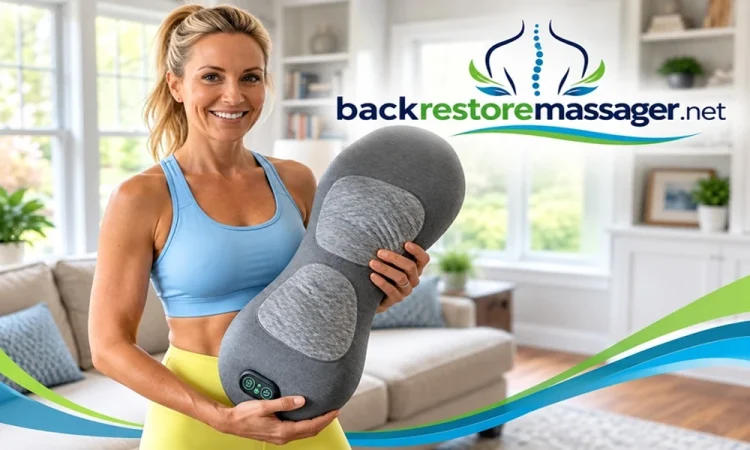

As a health specialist with years of experience in spinal alignment, physical rehabilitation, and ergonomic wellness, I am always evaluating home therapy tools with a rigorous clinical eye. Lumbar tightness, nerve pressure, and daily spinal fatigue are exceptionally common complaints, often driven by modern sedentary lifestyles, long hours sitting at desk setups, or repetitive physical stress. When I was introduced to the Back Restore lumbar therapy device, I wanted to personally test its mechanics, comfort levels, and overall therapeutic value. After putting it through an extensive multi-week evaluation, I am pleased to share my professional insight into how this dynamic device performs under real-world conditions.
Understanding the Technology Behind Back Restore
What immediately distinguishes Back Restore from standard manual foam rollers or passive plastic arch stretchers is its active, triple-action therapeutic design. Rigid plastic stretchers rely entirely on passive body weight, which can often strain cold or severely guard-tight muscles. In contrast, Back Restore unites three clinically supported modalities into one automated system engineered to address lumbar discomfort from multiple anatomical angles.
At the center of the device is motorized dynamic decompression traction. The central cushion elevates and lowers in rhythmic cycles, gently expanding restricted intervertebral disc spaces across the lower lumbar region. This lifting action helps unload pressure from compressed vertebrae and irritated nerve pathways while promoting the flow of nutrient-dense fluid back into dried-out discs. Coordinated with this gentle traction is deep-penetrating thermal heat therapy, which radiates continuous warmth into hyperactive paraspinal muscles, loosening stiff core tissue and boosting localized circulation. Finally, high-frequency vibration massage delivers smooth mechanical oscillations across the lower back to calm nervous system sensitivity and dissolve stubborn muscle knots. Together, these synchronized features work to nurture the natural inward lordotic curve of the spine.
My Hands-On Testing Experience
To evaluate its performance accurately, I incorporated Back Restore into a daily fifteen-minute recovery session after long hours on my feet and at my desk. Setting up the device was simple and convenient. I positioned the unit on a flat, supportive surface-specifically a standard yoga mat laid over a carpeted floor-and gently lay back so that my lower back rested naturally over the central ergonomic contour.
Using the intuitive handheld remote control, I was able to effortlessly adjust traction height, heat intensity, and vibration modes mid-session. The motorized lift operated smoothly and quietly, lifting my lower spine into a full, comfortable stretch without any sudden, uncomfortable shifts. Within two minutes, the calibrated thermal element reached a soothing, deep-penetrating temperature that instantly relaxed my lower back muscles. As the thermal warmth and acoustic vibration loosened deep tissue tension, the dynamic traction was able to achieve a far deeper, more effective spinal stretch. The automated fifteen-minute timer provides excellent peace of mind, ensuring that sessions do not over-stretch sensitive spinal ligaments. Once finished, the unit deflated gently, allowing me to roll smoothly onto my side before standing up refreshed.
Key Physical Benefits Observed During Testing
Throughout my hands-on trial, I recorded several clear physical benefits that align with sound biomechanical principles. Most notably, the device provided immediate decompression relief. Gravitational forces load the lower spine throughout the day, compressing discs and tightening surrounding tissue. The active lifting mechanism of Back Restore effectively reverses that pressure, leaving the lumbar area feeling lighter, elongated, and significantly less tense.
Additionally, combining therapeutic heat with mechanical vibration proved highly effective at breaking up muscular guarding. When lower back pain strikes, nearby muscles freeze up to protect the spine, creating a persistent cycle of stiffness and ache. By comforting those hyperactive muscle groups, Back Restore enhances spinal flexibility and overall lower body mobility. For anyone dealing with everyday lower back stiffness, desk fatigue, or mild sciatic nerve irritation, this non-invasive tool provides a gentle, home-based alternative to expensive ongoing clinic visits.
Final Verdict: Is Back Restore Worth Buying?
After completing a detailed hands-on trial and evaluating its structural quality, safety features, and multi-modal therapeutic performance, I can confidently confirm that Back Restore is worth buying. The device successfully combines dynamic spinal traction, deep thermal warmth, and targeted vibration massage into one compact, user-friendly home system.
For individuals looking for an accessible, effective way to ease lower back tension, decompress tight vertebrae, and restore comfortable daily movement, Back Restore is worth buying as a practical long-term investment in overall spinal health and everyday mobility.
Where to Buy Back Restore
To guarantee that your spinal therapy investment delivers all intended thermal and vibration benefits, navigate straight to the official Back Restore product page. Buying directly from the brand provides access to reliable customer assistance, valid return policies, and promotional discounts. Never settle for unverified secondary market listings when you can easily buy the authentic product directly from the primary supplier online.