
Gurmar (Gymnema Sylvestre) for Blood-Sugar & Sugar-Reduction Formulations: A Bulk Sourcing Guide

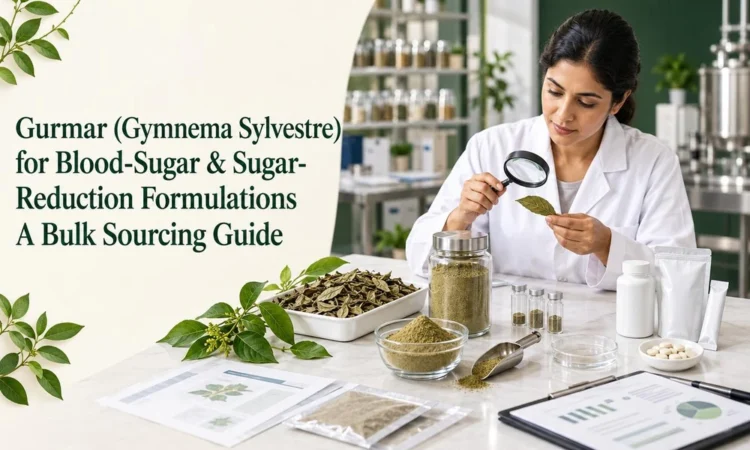
Gurmar Leaves at a Glance: Botanical Profile & Industrial Relevance
Gurmar has always had a well-defined place in metabolic health practices for generations. The procurement of this type of material poses a certain difficulty for the buyers, as it is important to ensure that the gymnemic acid levels are stable in each of the acquired batches, since in this field, the potency claims are checked far more rigorously than those in any other type of botanical material. The following guide describes the aspects to be considered while working with a gurmar raw material supplier.
Botanically, Gurmar is a woody climber plant that grows in the tropical rainforests of India, Africa, and Australia, and the leaves are the plant part that is used as the source of bioactive substances. The harvesting of the leaves should be done at certain growth stages to obtain the maximum quantity of gymnemic acid, and the way the leaves are dried after harvesting influences the preservation of the actives.
Market Demand & Why Brands Are Sourcing It Now
The demand for this ingredient has risen together with increasing awareness about the metabolic health and sugar reduction categories. For brands looking for organic gurmar leaves wholesale are noticing that availability of organic gurmar leaves is limited in comparison to the availability of non-organic gurmar leaves, which moves the procurement process earlier in the sourcing schedule for those companies that need certified material in substantial quantities.
Actives: Gymnemic Acids & Standardization
The basis for the efficacy of products in this category is mainly the amount of gymnemic acid content, a group of triterpene saponins considered to be the bioactive agents contained in the gurmar leaves. This gymnemic acid standardized extractusually consists of 25% to 75% gymnemic acid depending on extraction method and intended application, and customers should ensure that they request the HPLC test report rather than relying on a general potency claim without supporting documentation.
Metabolic-Health Category: The B2B Angle
The metabolic health category is actually a genuine growth opportunity for ingredients suppliers and brands. Formulators developing gymnema for blood sugar supplements are increasingly looking for partners who understand both the traditional use case and the regulatory framing required for claims in this closely scrutinized category, rather than generic botanical vendors unfamiliar with the space.
For B2B procurement, a strong supplier relationship should include sample evaluation, specifications, batch identification, and documentation support. Suppliers should explain the botanical form, testing, certifications, and shipment documents.
Formats & Quality Specs
Raw material is available in several forms suited to different production needs. Buyers sourcing gurmar leaves cut & sifted benefit from a format well suited to tea infusions and traditional extraction processes.
For the uses like capsules, tablets, mixtures and others, where homogenous distribution is required, powder form is preferred. The particle size, moisture content, bulk density, flow characteristics and foreign matter criteria could influence the process.
TBC or extract formats can be considered when manufacturers require concentrated botanical material or a defined active specification. Buyers should ensure that plant part, extraction details, standardization level, and analytical method are clearly stated.
Certifications & Compliance
Certification requirements in this category extend beyond a basic quality statement. Buyers requiring organic gurmar leaves powder should confirm the following before accepting a lot:
- Current organic certification applicable to the target market.
- Heavy metal testing documentation matched to the specific lot.
- Pesticide residue testing documentation matched to the specific lot.
- Microbial testing documentation matched to the specific lot, not a generic reference sample.
Applications
Beyond capsule and tablet formats, gymnema sylvestre for formulation purposes goes as far as functional beverages, chewable tablets, and combination formulations that include other plants with metabolic benefits like bitter melon and berberine. Due to its unique bitterness in taste, which can even suppress sweetness, it demands special care during the development phase to ensure the final product remains appealing for continued consumption.
How to Evaluate a Bulk Gurmar Leaves Supplier
Evaluating a bulk gymnema sylvestre powder supplier properly requires looking past price quotes toward documented consistency. A few factors worth confirming before finalizing a purchase order:
- Request a recent Certificate of Analysis showing actual gymnemic acid percentage via HPLC.
- MOQ, sampling policy, production lead time, and shipping arrangements.
- Confirm harvest season timing and whether material is fresh or carried over stock.
- Verify heavy metal, pesticide, and microbial testing on every incoming lot.
A supplier who provides direct responses and documentation will be easy to manage for repetitive procurements. Find out whether the specifications can be maintained for future lots or how the variations are handled.
Frequently Asked Questions
Q: Can you supply gurmar standardized to a specific gymnemic acid percentage?
A: Yes, standardization is normally between 25% and 75% of gymnemic acids, depending on the process used for extraction. It is wise to ask for HPLC test results.
Q: Which formats are available – leaves, cut & sifted, TBC or powder?
A: Gurmar can be available as whole leaves, cut and sifted material, TBC extract, and powder. Tea manufacturers may prefer leaves or cut and sifted material, while capsule and tablet manufacturers may require powder or standardized extract for easier dosing, blending, and formulation.
Q: Is your gymnema organic certified and suitable for regulated markets?
A: Organic-certified gurmar lots can be supplied with documentation confirming certification and traceability. For regulated markets, buyers should verify origin, processing controls, testing documentation, and destination requirements. Certification status should be confirmed for the specific lot supplied.
Q: What quality and safety testing accompanies each batch?
A: Batch documentation may also involve gymnemic acid assay using HPLC, heavy metals test, pesticide residue screening, and microbiological testing. Results should correspond to the exact batch and agreed specification, supporting quality and safety review.
Q: What are the MOQ, sampling and lead times for bulk gurmar?
A: MOQ, sample availability, and lead times depend on format, quantity, harvest season, extraction grade, and standardization level. Confirm these details before ordering and request a representative sample with current batch documentation.
Partner With a Certified Gurmar Leaves Supplier
The selection of the proper partner for gurmar leaves bulk export ultimately depends on active data which is validated, the availability of consistent supply in accordance with seasonal harvest cycles, and the documentation which can stand scrutiny in terms of regulatory compliance in the destination country. The buyers who have incorporated this assessment right from the start of their sourcing process rarely experience the problems related to formula delays and compliance issues, which are more expensive than the modestly higher per-kilo price.