
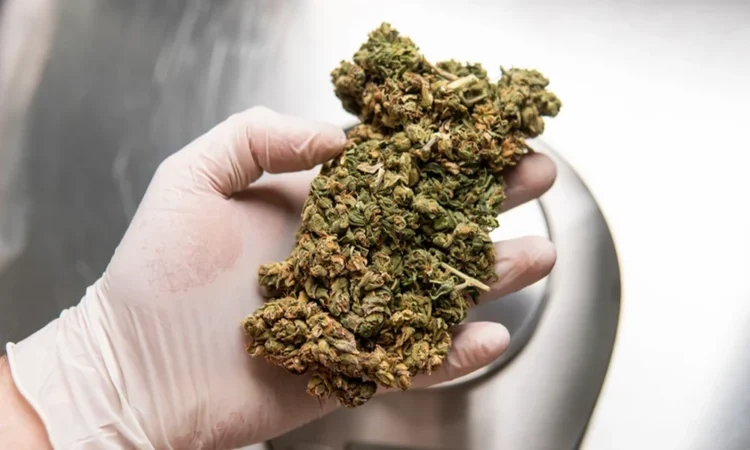
THCA products often display percentages, cannabinoid profiles, batch numbers, and laboratory results. For someone comparing THCA flower or other hemp-derived products, all of that information can seem complicated at first.
Understanding THCA potency is easier when you know which numbers matter and what a Certificate of Analysis, commonly called a COA, can tell you. Instead of judging a product only by packaging or a high percentage printed on a label, reviewing the available laboratory information can provide a clearer picture of what is actually in the product.
What Does THCA Potency Mean?
THCA stands for tetrahydrocannabinolic acid. It is a cannabinoid naturally found in cannabis plants and is a precursor to THC.
A THCA percentage shown on a product generally represents the amount of THCA detected in the tested sample. For example, two varieties of THCA flower may have noticeably different THCA percentages even though they belong to the same general product category.
Higher numbers are not automatically an indication that one product is better. Potency is only one characteristic to consider.
Aroma, cannabinoid profile, terpene composition, freshness, growing conditions, and overall product quality can also help distinguish one flower from another.
What Is a THCA COA?
A Certificate of Analysis is a laboratory report containing test results for a particular product or batch.
A useful COA may include information such as:
- THCA percentage
- Delta-9 THC level
- Other detected cannabinoids
- Batch or sample identification
- Laboratory information
- Testing date
- Additional contaminant testing when performed
Consumers should check whether the COA corresponds with the product or batch they are reviewing. A laboratory report from a different batch may not perfectly represent the material currently being sold because cannabinoid concentrations can vary between harvests.
Utoya currently highlights third-party laboratory testing across its THCA flower selection and notes that potency may vary between batches.
THCA Percentage Is Only Part of the Picture
It can be tempting to compare THCA flower by looking for the highest percentage available.
That approach misses several other characteristics.
Different cannabis varieties can have distinct terpene and cannabinoid profiles. These compounds contribute to the plant’s aroma and other characteristics, meaning two products with similar THCA percentages may still be noticeably different.
For this reason, shoppers researching THCA flower can look beyond a single potency number and review the complete product information.
Why Does Total THC Matter?
THCA and delta-9 THC are related but are not identical.
When THCA is exposed to sufficient heat, it can convert into THC through a process called decarboxylation. Because of this conversion, laboratory testing and hemp regulations may consider the potential THC produced from THCA.
USDA hemp-testing guidance specifically requires compliance testing to account for the potential conversion of THCA into delta-9 THC when calculating total THC.
That is one reason reading the full cannabinoid profile provides more information than looking at a THCA percentage alone.
Check the Batch Before Choosing THCA
Cannabis is an agricultural product, so natural variation can occur from one harvest or batch to another.
When comparing THCA products, look for current testing that can be connected to the specific product whenever possible.
Useful information includes the product name, cannabinoid profile, batch information, testing date, and laboratory results.
Know What You Are Looking At
THCA potency does not need to be confusing.
Start with the THCA percentage, then examine the broader cannabinoid profile and available laboratory documentation. Consider the product type and other characteristics instead of treating the largest percentage as the only measure of quality.
Learning how to read a THCA label and COA makes it easier to compare products based on actual information rather than marketing claims alone.
This post was written by a professional at Utoya Organics. Utoya Organics is a producer, developer and manufacturer of hemp-derived products. Buy Delta 8 THC, Delta 9 THC, THCP, HHC, THC-O, CBD, CBG, CBN, and more! We formulate our own products and distribute them all over the United States with over 400 locations nationwide. Utoya specializes in cannabinoid products such as edibles, flowers, tinctures, vapes, Not Ya Sons Weed THCA Preroll and more! All of our oil blends are Nano-Amplified to absorb faster (maximum bioavailability). All of our vaping products and hemp flowers are free of any solvents. No MCT, no alcohol, no vitamin E, no VG. Our cannabinoid distillates are never isolates, so it’s always golden in color and very effective. All third-party tested to meet compliance.