
Most parents check their teenagers for acne. They watch for mood swings and growth spurts. But they rarely check for scoliosis.That is understandable. Scoliosis does not cause pain in most young people. And when something does not hurt, no one looks for it.
But that is exactly the problem. The best time to treat scoliosis is early. And early signs are there. You just need to know what to look for.
Here are five early signs of scoliosis in teenagers that most people miss.
1. One shoulder sits higher than the other
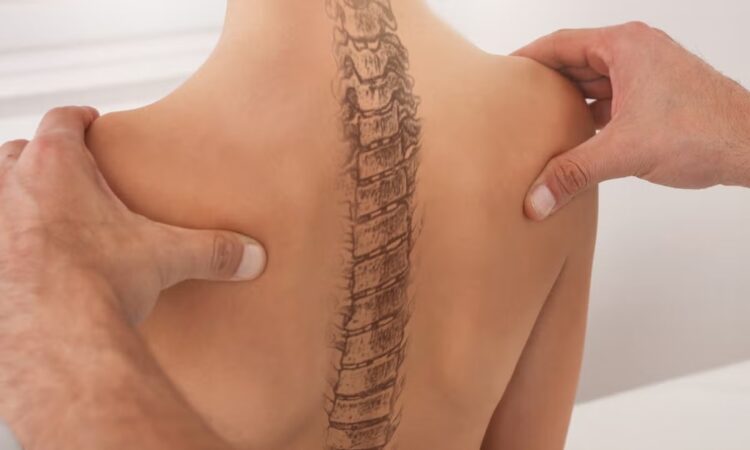
This is the most common early sign. Have your teen stand up straight. Look at them from behind. Check where both shoulders fall.
They should be level. If one shoulder is visibly higher, that is not normal posture. That is a possible spinal curve. Teenagers rarely notice this themselves. They do not look at their own back in the mirror. A parent or teacher usually spots it first.
Some parents think their teen just stands crooked. Or that they are slouching. But a height difference between shoulders does not come from bad posture. It comes from the spine curving sideways.
2. One shoulder blade sticks out more than the other
Ask your teen to stand normally. Look at their shoulder blades. Do both lie flat against the ribcage?
In a healthy spine, they should. In scoliosis, one shoulder blade often protrudes outward. It looks like a small bump or wing on the back. Teenagers may complain that backpacks feel uneven. Or that one bra strap keeps slipping off. These small complaints seem minor. But they point to something real.
The protruding shoulder blade happens because the spine rotates. It does not just curve sideways. It twists. And that twist pushes the shoulder blade outward.
3. Uneven waist or hips
Have your teen stand with their feet together. Look at their waistline. Is there more space between the arm and the body on one side?
Now look at their hips. Is one hip higher than the other?
These differences are subtle. You might not notice them unless you are looking carefully. But they matter.
Teenagers with uneven hips may find that pants fit poorly. One leg of their jeans may seem longer. Or they may feel like they are leaning to one side when standing.
They are not imagining this. The spinal curve shifts the entire pelvis. And that changes how clothes fit and how the body feels.
4. Head not centred over the pelvis
This one is easy to check. Have your teen stand naturally. Look from behind. Drop an imaginary straight line from the centre of their head down to the floor.
Where does that line land? It should go straight through the tailbone. If it lands to one side of the buttocks, the spine is likely curved. Teenagers with this sign may appear to tilt their head. Or they may keep one shoulder forward without realizing it. Teachers sometimes call this “standing crooked.”
But it is not a habit. It is the body trying to balance itself. The brain keeps the eyes level and the head straight. The spine and shoulders adjust underneath. That adjustment creates the tilt.
5. Clothes that suddenly fit unevenly
This sign is often dismissed. Parents buy new clothes. The teenager says something feels off. Everyone assumes the clothes are defective.
But sometimes the clothes are fine. The body has changed.
Look for these specific complaints:
- One pant leg drags on the floor while the other does not
- A t-shirt twists so the center seam is not in the middle
- Sleeves feel longer on one arm
- A dress or skirt does not hang straight
These are not fitting issues. These are signs that the spine is no longer straight. The body has become asymmetrical. And that asymmetry shows up in how clothes hang.
What to do if you see these signs
Do not panic. Most scoliosis cases are mild. Many teenagers live full, active lives without major treatment. But do not ignore the signs either. Early detection changes outcomes.
A physiotherapist can assess your teen’s spine properly. They will check for curvature, rotation, and muscle imbalances. They will also measure how severe the curve is.
If treatment is needed, there are options. Fisioterapi skoliosis focuses on strengthening the right muscles. It helps improve posture and slows curve progression. For teenagers who are still growing, this is especially important.
Some parents worry about braces or surgery. But those are only for moderate to severe cases. Most teenagers benefit from physiotherapy alone.
Why teenagers miss these signs themselves
Teenagers are not looking at their own backs. They look at their faces in the mirror. They check their hair and their skin. The back is out of sight.
And scoliosis does not hurt. A teenager with a curved spine feels normal. They do not wake up with back pain. They do not struggle to run or play sports. There is no obvious symptom that says “something is wrong.”
So they never mention it. And parents, busy with work and life, do not think to check. That is why these signs are so often overlooked. Not because anyone is careless. But because the condition is silent.
A simple check you can do at home
The forward bend test takes thirty seconds. Here is how to do it:
Have your teen stand with feet together. Ask them to bend forward at the waist. Let their arms hang down like a gorilla. Keep their knees straight but not locked.
Now look at their back from behind. Check the ribcage on both sides. Does one side stick up higher than the other? That is called a rib hump. It is a clear sign of scoliosis.
If you see a rib hump, make an appointment with a physiotherapist. Fisioterapi skoliosis can help address the muscle imbalances causing that hump.
The bottom line
You do not need to check your teen’s back every week. But checking once or twice a year during growth spurts makes sense. Teenagers grow fast between ages 10 and 15. That is when curves typically appear or worsen.
Look for uneven shoulders. Check the shoulder blades. Watch how clothes fit. Do the forward bend test.
These checks take two minutes. And they can catch scoliosis early. Early treatment means simpler treatment. And that is worth two minutes of your time