

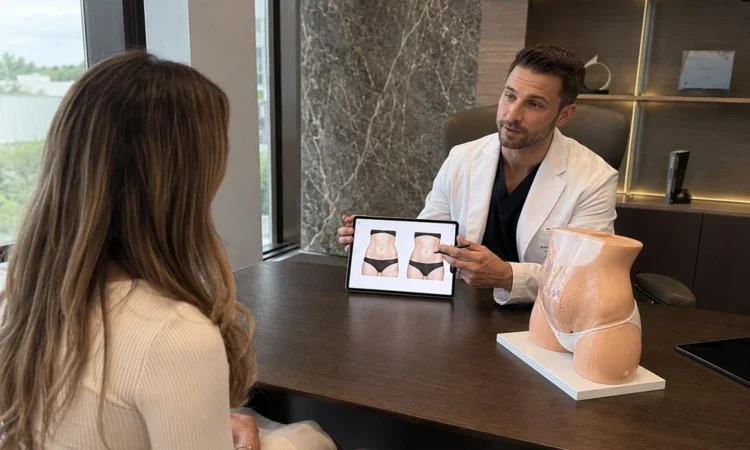
After major weight loss, loose abdominal skin and stretched muscles often remain even after reaching a stable weight, and diet or exercise alone can’t correct them. Abdominoplasty removes the excess skin and repairs the abdominal muscles, while a related but distinct procedure, panniculectomy, focuses specifically on removing an overhanging apron of skin and fat.
Once significant weight is gone, many patients are left with two separate but related problems: loose skin that won’t retract and abdominal muscles that stayed stretched throughout the weight gain and loss. Abdominoplasty addresses both issues.
Why Skin and Muscle Both Need Attention
The weight comes off. The stretch marks on your muscles and skin usually do not fade away with it.
After dramatic weight loss, skin that stretched over years or decades often can’t retract fully on its own, remaining loose and saggy regardless of how disciplined diet and exercise are afterward. Similarly, the abdominal muscles are frequently loosened by the prior weight gain, and this muscle laxity generally requires surgical repair rather than resolving through exercise alone.
What Abdominoplasty Specifically Addresses
A full abdominoplasty removes the excess loose skin, tightens the underlying abdominal muscles, and often repositions the belly button for a more natural result. This combination of skin removal and muscle repair is what distinguishes it from procedures that address skin excess alone.
How Panniculectomy Differs
A related procedure, panniculectomy, focuses specifically on removing a large, overhanging panniculus, an apron of excess skin and fat hanging below the waistline, without extending much above the navel and typically without tightening the abdominal muscles or reshaping the waistline. Because a panniculectomy addresses a functional concern rather than a purely aesthetic one, it’s sometimes covered by insurance, unlike a cosmetic abdominoplasty.
Comparing Recovery Timelines
Abdominoplasty typically takes two to four hours depending on the extent of work and whether liposuction is combined, with recovery generally ranging from four to six weeks. Panniculectomy recovery can take somewhat longer, up to eight weeks, given the extent of tissue often involved.
The Psychological Impact
Research on post-bariatric abdominoplasty has found meaningful improvements in psychological well-being among formerly obese patients, reflecting how significantly visible excess skin can affect confidence even after substantial weight loss has been achieved.
If you’re dealing with loose abdominal skin and muscle laxity after weight loss, board-certified plastic surgeon Dr. Siamak Agha can determine the right approach for you during a consultation in Newport Beach.
Ready to discuss abdominoplasty after weight loss? Schedule a consultation with board-certified plastic surgeon Dr. Siamak Agha at The One Plastic Surgery Center in Newport Beach to discuss your goals and options.
Results and candidacy vary by patient. A consultation is required to determine your individual suitability for any procedure discussed in this article.
FAQ
Why doesn’t abdominal skin retract after weight loss? Skin that’s been stretched over years often loses its natural elasticity and can’t fully retract on its own, regardless of subsequent diet and exercise.
What’s the difference between abdominoplasty and panniculectomy? Abdominoplasty removes excess skin and tightens abdominal muscles for a full contour change, while panniculectomy focuses specifically on removing an overhanging apron of skin and fat without muscle repair.
Is panniculectomy covered by insurance? It sometimes is, since it addresses a functional medical concern, while cosmetic abdominoplasty is typically not covered by insurance.
How long is recovery after abdominoplasty for weight loss patients? Recovery generally ranges from four to six weeks, while panniculectomy recovery can take up to eight weeks depending on the extent of tissue involved.
Does abdominoplasty improve more than just appearance? Yes, research shows meaningful improvements in psychological wellbeing among post-bariatric patients after abdominoplasty, reflecting the impact of removing visible excess skin.