
If you have been told that you may need tooth extractions before orthodontic treatment, it is natural to feel a little nervous. Many patients wonder whether newer treatment options, such as self-ligating braces, can help create enough space in the mouth and possibly avoid having teeth removed. The answer is not always straightforward, but understanding how these braces work can make the decision-making process much easier.
When discussing treatment options with an orthodontist, many patients learn that self-ligating braces are designed differently from traditional braces. Those looking for an experienced orthodontist in Vaudreuil-Dorion, QC can contact Archambault & Morton Orthodontics. They offer specialized orthodontic care tailored to each patient’s unique needs, helping individuals and families understand the most appropriate treatment approach for their smiles.
What Are Self-Ligating Braces?
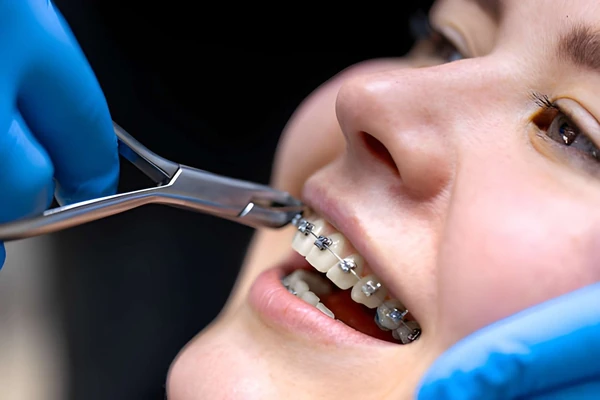
Self-ligating braces use specialized brackets with built-in clips or sliding doors that hold the arch wire in place. Unlike traditional braces, they do not rely on elastic bands to secure the wire.
This design offers several potential advantages:
- Reduced friction between the wire and brackets
- More efficient tooth movement in certain situations
- Easier cleaning and oral hygiene
- Shorter adjustment appointments for some patients
Many people also find them a bit more comfortable, especially during the early stages of treatment.
Can They Help Avoid Extractions?
In some cases, yes.
One of the reasons self-ligating braces have gained attention is their ability to allow teeth to move more freely along the arch wire. This may help orthodontists create space by gently expanding dental arches and improving alignment without immediately turning to extractions.
For patients with mild to moderate crowding, this can sometimes reduce the need to remove healthy teeth. That is often welcome news because most people would rather keep their natural teeth whenever possible.
That said, self-ligating braces are not a magic solution. The brackets themselves do not automatically eliminate the need for extractions.
When Extractions May Still Be Necessary
Every smile is different, and some orthodontic problems simply require more space than braces alone can create.
Extractions may still be recommended when:
- Severe crowding is present
- Teeth protrude significantly beyond the jaw’s natural position
- Bite problems are complex
- Jaw size cannot comfortably accommodate all teeth
In these situations, removing one or more teeth may help achieve a healthier bite, better facial balance, and more stable long-term results.
Treatment Planning Matters Most
One important thing people sometimes overlook is that treatment success depends far more on diagnosis and planning than on the type of bracket being used.
Orthodontists evaluate several factors, including:
After reviewing these details, they determine whether extraction or non-extraction treatment is the better option.
The Bottom Line
Self-ligating braces may help reduce the need for tooth extractions in some cases by creating space more efficiently and encouraging natural tooth movement. Patients with mild to moderate crowding can often benefit from non-extraction treatment. Still, every smile is unique. A detailed orthodontic assessment is the best way to determine whether extractions are necessary for healthy, long-lasting results.