Key Ortho Model Resin: Orthodontic Model Printing Resin and Hard Resin for Dental Splints

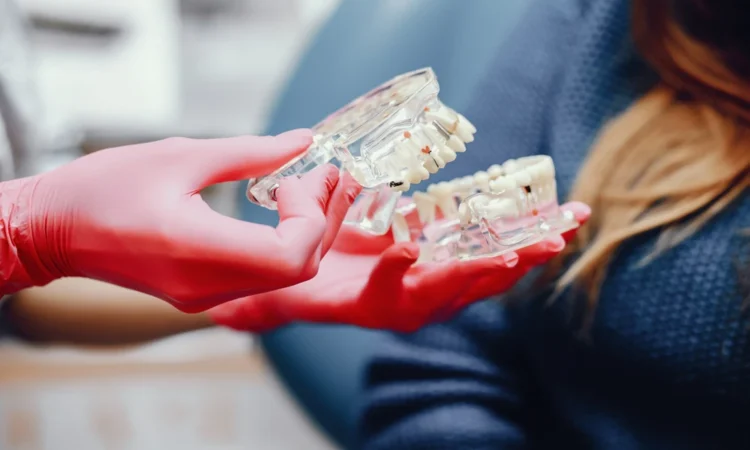
The adoption of digital workflows in orthodontic laboratories has fundamentally changed how study models, aligner models, and indirect bonding trays are produced. Where plaster pours and stone models once defined the standard, orthodontic model printing resin now enables the accurate, repeatable, and high-throughput production of dental models directly from intraoral scanner or CBCT data. Key ortho model resin is a category of photopolymer resin specifically formulated for these orthodontic and aligner fabrication workflows, and understanding its properties, applications, and the criteria for selecting the right resin for each use case is essential knowledge for orthodontic lab technicians and in-office dental teams adopting digital model production.
What is Key Ortho Model Resin?
Key ortho model resin is a category of dental-grade photopolymer resin designed for printing orthodontic study models, working models for aligner fabrication, and the hard resin components used in retainer and dental splint production. The resin is formulated for use with MSLA (Masked Stereolithography Apparatus) or DLP (Digital Light Processing) 3D printers at wavelengths of 385 nm or 405 nm, which are the standard print wavelengths for desktop dental printers.
The defining performance characteristics that distinguish key ortho model resin for braces and aligner workflows from general-purpose resins:
- Dimensional accuracy: orthodontic models must reproduce the patient’s dental anatomy with the precision that aligner thermoforming and indirect bonding tray fabrication require. High-accuracy orthodontic model printing resin maintains the dimensional fidelity of the printed model relative to the digital file across the full model size, without the warping or shrinkage that lower-quality resins can introduce
- Surface smoothness: a smooth model surface is essential for the accurate seating and uniform contact of thermoformed aligners. Surface roughness on the printed model transfers to the aligner’s internal surface, creating fit inconsistencies and patient discomfort
- Mechanical stability: models used for thermoforming must withstand the heat and pressure of the thermoforming cycle without deforming. Key ortho model resin formulations are selected for the combination of stiffness and heat resistance that thermoforming requires
- Biocompatibility certification: resins that contact the oral cavity, including splint and tray resins, must hold ISO 10993 biocompatibility certification confirming the absence of cytotoxic, sensitizing, or genotoxic substances at the expected exposure levels
What applications use orthodontic model printing resin?
Dental ortho model 3D resin is used across several distinct orthodontic and restorative workflows:
- Clear aligner fabrication: the model-based aligner workflow prints a series of sequential models from the digital treatment plan, over which the aligner material is thermoformed to produce each stage of the aligner series. The accuracy of each printed model directly determines the accuracy of each aligner stage and consequently the clinical predictability of the treatment
- Indirect bonding trays: the fabrication of IDB trays for bracket placement requires printing an accurate replica of the patient’s dentition with bracket positions defined in the digital setup. The model must faithfully reproduce the tooth anatomy and the planned bracket positions so the bonding tray transfers each bracket to the correct location with the correct angulation
- Study and communication models: high-accuracy printed models for patient consultation, treatment planning review, and the communication of treatment outcomes between the orthodontist and the laboratory
- Retainer fabrication: post-treatment retainers thermoformed over digital models require the same model accuracy as aligners, and the model resin’s resistance to repeated thermoforming cycles is relevant for labs that reuse models for multiple retainer fabrications
What is hard resin for dental splints and how does it differ from model resin?
Hard resin for dental splints is a photopolymer formulation designed for direct printing of occlusal splints, night guards, and the rigid components of dental appliances that are worn in the mouth and must withstand the forces of occlusion and parafunction. Splint resins differ from orthodontic model printing resin in several important ways:
- Biocompatibility requirement: splint resins contact oral tissues directly and must hold Class IIa or higher biocompatibility certification under ISO 10993 and FDA 510(k) clearance where applicable for intraoral use. Model resins are not required to meet intraoral biocompatibility standards
- Flexural strength and fatigue resistance: splint resins must withstand the repeated loading of bruxism and clenching forces over months of nightly wear without cracking, delaminating, or losing dimensional stability. The flexural strength, impact resistance, and fatigue life of a splint resin are primary selection criteria
- Polish ability: a printed splint must be polishable to a smooth surface finish that the patient finds comfortable and that does not accumulate biofilm. Splint resins formulated with appropriate filler systems and surface chemistry polished to a clinical surface finish
What printer compatibility considerations apply when selecting orthodontic model resin?
The performance of key ortho model resin and dental ortho model 3D resin depends on the interaction between the resin’s photochemistry and the printer’s light source wavelength, irradiance, and build platform characteristics. Resin manufacturers provide printer-specific exposure profiles (layer time, lift speed, rest time) that are validated for specific printer models. Using an unvalidated printer-resin combination without developing validated print parameters introduces risk of dimensional error, delamination, or incomplete cure that compromises model accuracy and downstream aligner fit. Dental laboratories adopting new model resins should request printer validation data from the resin manufacturer and conduct the own accuracy verification using a calibrated model or printed reference artifact before committing the resin to clinical production.
How should printed orthodontic models be post-processed?
Post-processing of key ortho model resin for braces and aligner models involves washing in isopropanol (IPA) or a dedicated resin wash solution to remove uncured surface resin, followed by post-cure exposure in a UV curing unit at the wavelength and duration specified by the resin manufacturer. Under-washing leaves a tacky surface that compromises the model’s surface finish and the aligner’s fit. Under-curing reduces the model’s mechanical properties and dimensional stability. Over-curing can induce brittleness and surface crazing. Following the resin manufacturer’s validated post-processing protocol consistently produces the predictable model properties that clinical production requires.
____________________________________________________________________________________
Paid Blog – 2