
Chiropractic is often pictured as a single technique, a person lies on a table, something is adjusted, they get up. In practice a well-run clinic offers a range of interventions and the adjustment is one of them, chosen when it suits the presentation. Singapore chiropractic services covering rehabilitation and manual therapy are better understood as a combination, because the hands-on work and the exercise work do different jobs and neither substitutes for the other.
The Assessment Comes First
A first appointment should be mostly conversation and examination. History of the complaint, what brings it on and what eases it, how long it has been present, previous episodes, general health, medications, work and activity patterns. Then a physical examination of movement, strength, joint mobility and, where relevant, neurological screening. Nothing sensible can be planned without this, and a clinic that moves straight to treatment on a first visit is skipping the step that determines whether treatment is appropriate at all.
Spinal Adjustment and Mobilisation
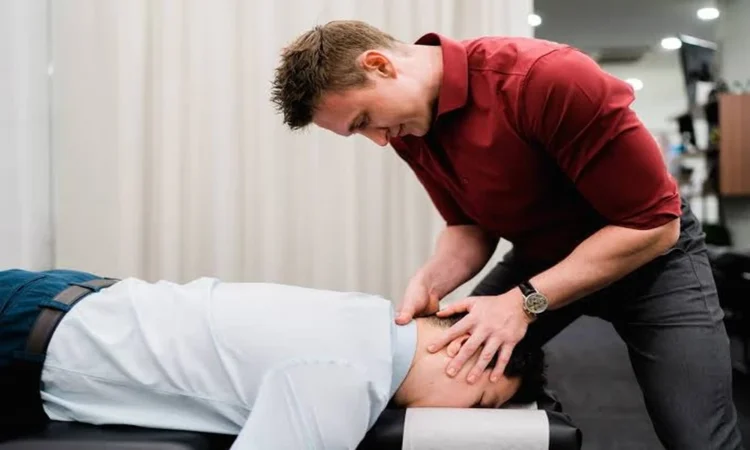
The adjustment, or high-velocity low-amplitude thrust, applies a quick controlled force to a specific joint, often producing an audible release as gas comes out of solution in the joint fluid. The sound is not the point and does not indicate anything being reset. Mobilisation applies slower, oscillating pressure without the thrust and suits patients who find the adjustment uncomfortable or in whom it is not indicated. Both aim to reduce pain and improve segmental movement in the short term.
Soft Tissue Work
Muscles and fascia frequently contribute more to a presentation than the joints do. Trigger point work, instrument-assisted techniques, active release with the patient moving through range, and fine-gauge dry needling all target this tissue directly. These are typically used to reduce sensitivity and restore range before or alongside exercise, since a muscle that guards constantly makes any loading programme harder to start.
Rehabilitation Exercise
This is the part that produces durable change, and it is the part patients most often skip. Prescribed exercise builds tolerance in the tissue that is complaining, restores strength where testing found a deficit, and progressively exposes the body to loads it has been avoiding. It is deliberately unexciting: a few movements, done consistently, progressed over weeks. A clinic offering chiropractic and rehab services should be sending you home with something specific rather than a general instruction to stretch.
What the Evidence Supports
For non-specific low back pain and mechanical neck pain, manual therapy combined with exercise has reasonable support for reducing pain and improving function, generally with modest effect sizes and best results in the short to medium term. Evidence does not support chiropractic care for conditions unrelated to the musculoskeletal system, and any clinic suggesting otherwise is going beyond what the research shows. Expect a practitioner to be straightforward about both the benefits and the limits.
Imaging and When It Helps
X-rays and scans are frequently requested and rarely necessary for straightforward mechanical back pain. Current guidance across most healthcare systems discourages routine imaging in the absence of red flags, partly because incidental findings are extremely common and can worry patients about changes that have no bearing on their symptoms. Imaging is appropriate where there has been significant trauma, where neurological signs are progressing, or where features suggest something other than a mechanical problem.
Realistic Course of Care
A reasonable plan states how many sessions before reassessment, what improvement is expected in that time, and what happens if it does not occur. Typically that means a small number of visits over a few weeks, a review, and a decision to progress, modify or refer. Be cautious of open-ended schedules of many pre-paid sessions agreed at a first visit, since a plan that cannot be revised is not really a plan.
Education and Self-Management
The part of care that continues between appointments matters more than the part delivered in the clinic, simply because there is more of it. Useful education covers what the diagnosis actually means, which is often reassuring since most mechanical back and neck pain has a good outlook; what activity is safe, which is usually more than people assume; how to modify rather than abandon the things that aggravate symptoms; and what a flare-up means, since a return of pain is common and rarely indicates damage. Patients who understand these tend to recover faster and return less often.
Qualifications and Regulation
Chiropractic is not currently a statutorily registered profession in Singapore in the way medicine and several allied health professions are, which places more weight on checking credentials yourself. Ask where the practitioner trained, whether the programme was accredited, how long they have practised, and whether they belong to a professional association. These are ordinary questions and any competent clinician answers them without discomfort.
Knowing When to See a Doctor Instead
Certain features need medical assessment rather than manual therapy, unexplained weight loss, fever, night pain unrelieved by rest, progressive weakness or numbness, changes in bowel or bladder function, saddle numbness, a history of cancer, or significant recent trauma. A responsible clinic screens for these and refers rather than treating. Within its proper scope, Singapore chiropractic services covering rehabilitation and manual therapy work best as short-term symptom relief paired with the loading that keeps the problem from returning.